Lately I’ve seen a lot, and I mean a lot of people grapple with AI and how (the management of) it is messing up their jobs. Some (fairly) recent examples: The nature of my job has completely changed by Rach Smith, this Mastodon-thread by @gedeonm on mastodon.social, and my colleague Joep’s blog post On the acceptance of GenAI. All great content and opinions I very much agree with.
The different opinions I see are shifting. A good friend of mine went from “yeah it writes simple scripts for me” to “I only use it to help me out with difficult bits of code” to “it writes everything for me, including the tests, I should actually be checking the tests but who has the time”. Many people I know are very much against using AI in their work, but they have been forced to change their habits, if not opinions, because the world around them has changed and they have to keep up. It’s a requirement now.
As a documentation writer I’m in the same boat, and I too dread what’s to come. But it’s like Groundhog Day for me. I’ve been here before, waking up every day and dealing with the Terrible Machine.
Translation memory and rates
Before my documentation career, I used to be a full-time freelance translator. Translation can be a lucrative job if you’re in the right domains (legal, medical), but for me it never was. I never got rich, and there were definitely times when I wondered if I’d make next month’s rent. Still, for the majority of my career it was an okay job because I love linguistics. The art of translation is a beautiful puzzle which, if solved in the best way, goes unnoticed by anyone who reads your work.
As a translator a translation tool is the first thing you need. Customers (mostly translation companies) send their texts out ready to edit in the tool. Most translation tools have always had a translation memory. This stores everything that’s translated, so if you want to search for a term to see how it was translated before, you can look it up. It also autofills any existing translations, which is handy if you have, for instance, a manual where you have to repeat actions.
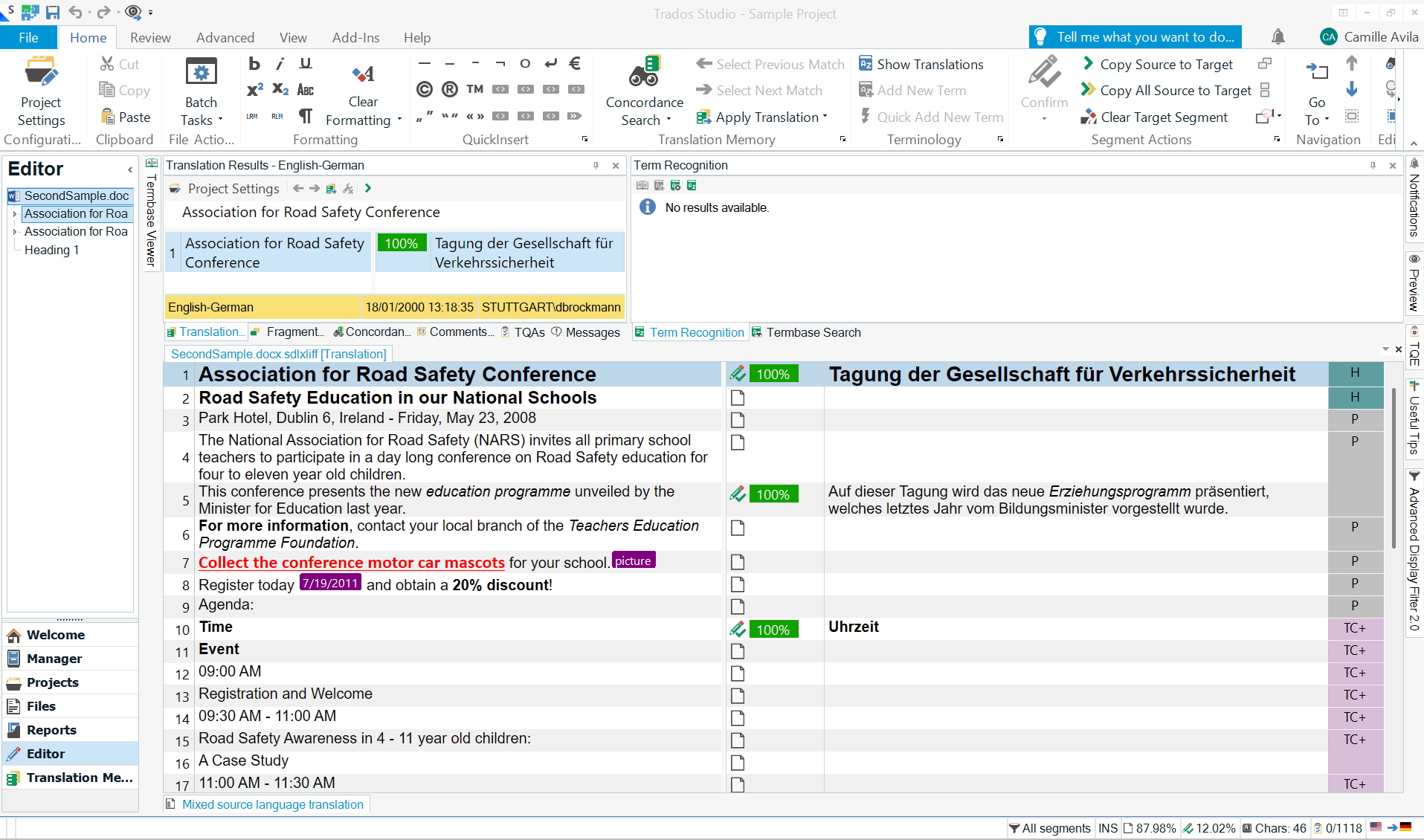
Trados Studio, the most used translation tool. A 100% match is labeled green and filled in for you.
Translations are usually not rated per hour but per word, and companies use the translation memory to price a translation: the full rate is only for ’new’ words, repetitions are often quoted at a (low) percentage of that rate because, in theory, you only need to check if the translation is still correct. This can get hairy if the translation memory contains errors or if the context changes, which is often the case.
Welcome to the machine
In the early days of Google Translate, machine translation (MT) was added to translation memories. An MT engine was filled with all the translation data that company had, and most times with data from other companies and brands as well (very cool and very legal 🫠 ). However, most of the MT engines weren’t that good at creating coherent sentences. Well, Google was, but it was expensive. And it was a lottery for all MT engines: sometimes the sentence would come out perfectly, often it was unreadable. Companies very quickly moved to pricing all the text at a low MT rate, because ‘you only need to check it’.
Any translator could see (and told their customers and bosses) that working with MT was going to be just as slow, maybe even slower than translating from scratch. If you encountered a mangled sentence you’d spend time to figure out if it was fixable, and in most cases you’d just delete the sentence and start over. Not doing that could produce a truly Frankensteined sentence. Read the English or Dutch manual for any 2+ year-old appliance produced in China: the English version is often machine-translated from Chinese to English (unedited) and the Dutch version is based on that English version. In my mind, lights don’t blink, they glisten.
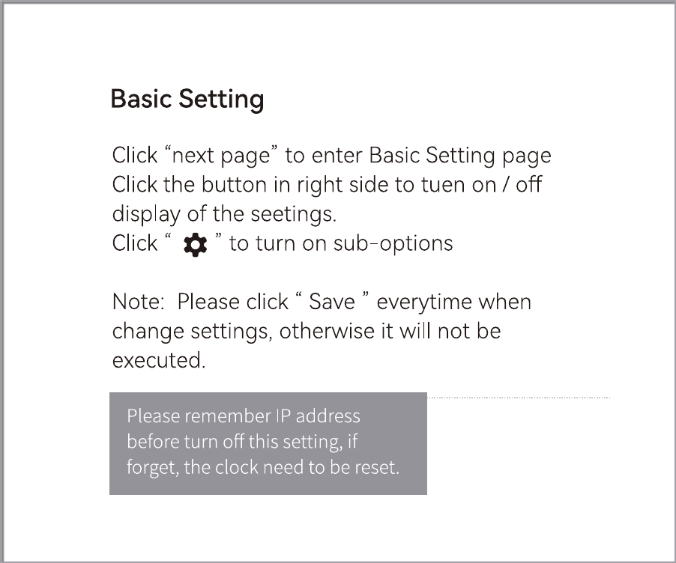
An excerpt from the English translation of the Ulanzi clock manual.
Quality dropped
Us translators fought the translation companies tooth and nail on MT usage, but it was no use. A tragic truth I learned early on is this: the vast majority of companies care about their bottom line over quality. Eventually, this even happens to the companies that spent decades doing it right and investing in quality. Microsoft was once the leading IT company in translation. At my university (around 2006) they had a representative of theirs show us how to create a good IT translation, and it was excellent indeed. Microsoft had their own freely accessible translation database in all the languages they offered, which was curated by professionals. They’ve abandoned all of that and even before AI and CoPilot, they went deep into machine translation.
Of course there were also translators who thought this was a great development and started to do all their translations like this. Their thought was “oh I’ll check every sentence carefully and then the quality will be excellent”. They didn’t, and it wasn’t. After a while, a lot of MT translations came my way and the customer would ask “we have complaints about this translation, can you check?” My advice was usually to redo the translation entirely. Customers seldom followed it.
Caved anyway, abandoned ship
Over time the MT engines got better. Of course they did, they were AI avant la lettre. I struggle to see the difference between MT engines and LLMs, to be honest. And at some point I caved. I had to. Prices for translations were going down, not up. Life was getting more expensive. If I could get a translation out the door faster, even if it wasn’t entirely up to my usual standards, I’d be able to start another one. So I paid a monthly fee for a service that enabled me to machine-translate a certain volume of words each month. I was churning out lots of texts that way, which depressed me to no end, and I didn’t get any richer than before.
During covid I was finally able to exit that terrible translator-eating machine. I’d been complaining about my work for ages, everyone who knew me knew how badly I wanted to get out. On LinkedIn many of my colleagues were still posting things like “the work we do is better than machine translation, we still have value!”, but in the years that followed, most of them went quiet and switched professions.
We never fixed it. It was a technology that hit us like a brick and never went away. We had to grapple with it, and I certainly wasn’t able to. It killed my love for two languages for a solid decade, I wasn’t even reading anymore in my spare time. I had to grieve my old profession, and sometimes I still do. Certainly now that LLMs have replaced MT engines, human work in IT translation is mostly gone. I don’t get to lay that magnificent puzzle anymore; it’s no longer needed.
I feel like I abandoned ship to board a much bigger one that is now sinking as well, because the same fleet that bombed my ship is now stronger and bombing the bigger ship. The only consolation I have is that this time, a much bigger work force is undergoing this fate. Maybe we can face the consequences together.
No answers
I’m sure we’ll live. In the meanwhile, just like anyone else speaking on the topic of AI, I have no answers. The only thing I can advise all of you is to go outside and experience real life some more. The LLM and the management pushing it will still be there when you get back and you will have a much better time.